Within the demanding arena of contemporary professional sliding, podium finishes is not merely solely a product of brute horsepower or driver bravado. Rather, it is now a multifaceted science which necessitates a scrupulous marriage of picking a inherently capable car, outfitting it with the highest-quality performance components, and, most critically, grasping its live performance on the circuit through sophisticated drift telemetry software. This comprehensive manual acts as your roadmap starting from the initial idea of a drift build all the way to the last engineering-refined tweaks that turn a capable vehicle into a consistent podium finisher. We will examine in detail the art and science of car suspension tuning, demonstrating how a modern suspension tuning tool like precise measurement hardware eliminates approximation and provides exceptional insight into your chassis's true behavior.
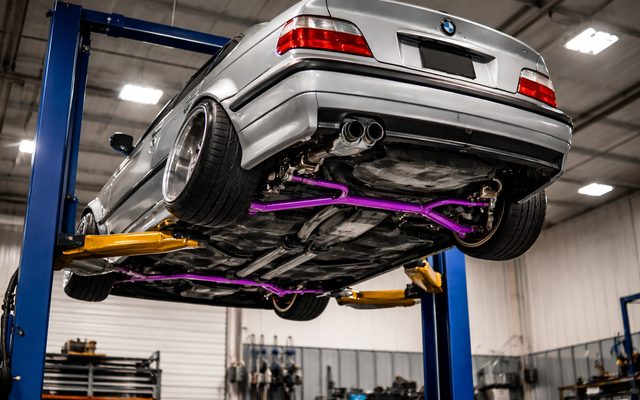
The bedrock of any successful drift car is, undoubtedly, the platform itself. Several vehicles have achieved legendary status within the global sliding culture due to their natural weight distribution, robust design, and the immense ecosystem of aftermarket support available. Picking the optimal platform is the initial and most important decision a builder will make. To illustrate, the BMW E36 is universally acknowledged as perhaps the the best all-around cars for drifting of all time. Its excellent evenly distributed mass, combined with a rear-wheel-drive layout and extremely reliable inline-six powerplants, establishes a car that is both accessible for novices and extremely effective in the control of a expert pilot. The successor of this concept, the BMW E46, builds upon these attributes with a increasingly sophisticated structure, broader stance for greater high-speed stability, and even more steering angle directly from the manufacturer. Another dominant option in the top-level circuit is the Corvette C6.
This American sports car offers a distinctive array of benefits to the sideways discipline, such as a light aluminium frame, a rear-mounted drivetrain component that aids in an ideal front-to-rear mass ratio, and the tremendous thrust of a big LS-series V8 engine. This blend transforms it into an complete weapon on track, able of initiating and sustaining extended drifts with seemingly effortless application of acceleration. For drivers desiring outstanding performance per dollar, the Nissan Z33 rises above as a excellent candidate. It is delivered from the factory with a stiff platform, a decent OEM locking differential, and the free-revving VQ35DE engine that delivers sufficient horsepower and torque for learning and advancing in the sport. Its follow-up, the Nissan 370Z, presents further improvements in chassis stiffness, handling precision, and peak powerplant power, establishing its position as a popular pick among competitive drivers. Additional iconic platforms that merit mention are the nimble Wankel-engined Mazda FC, the ever-present S13 Silvia/240SX, the American SN95 generation Mustang, the electronic-equipped BMW E90, and the compact yet unbelievably fun and teachable MX-5 Miata. Every single one of these chassis provides a unique array of traits, difficulties, and possibilities, but they all have in common the core ingredients required to become a capable drift machine.
However, choosing the optimal chassis is just the beginning. To access the true capability of any of these machines, substantial upgrades to the steering system and chassis control systems are absolutely non-negotiable. This is where the realm of performance tuning hardware becomes vital importance. The single most game-changing upgrade for a dedicated drift machine is the integration of a drift-spec drift angle kit. These engineered systems, like those engineered by performance brands like SLR Speed, are engineered to significantly expand the vehicle's maximum turning lock. A factory road car is extremely restricted in how far its front wheels can turn, a engineering limitation for public road use. In oversteer driving, but, extreme steering input is constantly needed to catch and hold a slide. An angle kit replaces the OEM hubs, rod ends, and potentially control arms with parts that permit the steered wheels to achieve steering lock beyond 70 or even 80 degrees, compared to a normal stock angle of around 40 to 50 °.
This immensely greater capability provides the pilot with exponentially more control during a angle, enabling it to be much simpler to begin a slide, sustain it through a extended corner, and change smoothly from one direction to the opposite. The improvement in handling is truly revolutionary. Paired with a properly selected steering kit is the just as critical enhancement to the chassis's spring and damper setup. Store-bought or including premium street coilovers are just not designed for the specific and harsh needs of sliding. A drift-spec system of suspension units is crucial. These engineered suspension components have specific damping rates and spring stiffness that are tuned for the rapid weight transfer that is characteristic of aggressive driving. When a operator starts a slide, the vehicle's weight is thrown violently to the outer of the turn. Correct performance dampers handle this movement in a controllable way, allowing the car to stabilize promptly and offering the driver clear feedback through the wheel and seat. They furthermore allow for precise tuning of ground clearance, rebound and compression rate, and cross-weight, which are all key parts of dialing in the vehicle's handling to a specific track or piloting technique. In combination, a top-tier drift angle kit and a correctly chosen set of drift-spec suspension units are the undeniable mechanical foundation upon which all future refinement is based.
Once the fundamental hardware is installed, the following essential stage in the build is the detailed setting of the vehicle's suspension geometry. This is the domain of chassis dynamics adjustment, a methodology that can seem intimidating to the newcomer but is, in reality, the secret to transforming a collection of high-performance parts into a harmonious and consistent vehicle. The most debated parameter of suspension geometry for sliding is definitely negative camber. Camber is the angle of the wheel compared to the perfectly straight plane when looked at from the front-on of the chassis. If the top edge of the tire is tilted towards the chassis, this is referred to as camber-in. For drifting, negative camber on the front tires is generally employed and is seen as critical. The reason is deeply related to vehicle dynamics.
When a vehicle is going around a bend at extreme sideways angles, the frame leans toward the external of the corner. This chassis roll forces the outer steering tire to diminish its ideal grip area with the track surface. By adding an inward tilt, the wheel is pre-angled to counteract this roll. As the car tilts into the turn, the tire flattens out against the asphalt, optimizing its traction at the precise time when it is needed most for control. Commonly, front axle adjustments for a dedicated drift car vary from approximately -3 degrees to as high as -5 degrees or even beyond, based on the parameters of the vehicle setup, compound selection, and pilot feel. The back tires also use inward lean, but the angles are usually more conservative and subtler than the front axle. Excessive negative camber at the rear can cause the vehicle to extremely prone to oversteer and hard to manage on throttle application, as it reduces the effective tire footprint of the driven tires during forward power delivery. Thus, rear camber settings are frequently in the range of -1 degree to -3 degrees, achieving a precise compromise between providing enough side grip to help in initiating and holding the angle while simultaneously preserving usable traction for acceleration the turn. Camber is just one component of the broader alignment puzzle, which furthermore includes toe, caster, and bump steer correction.
Toe angle is the orientation of the tires as seen from a bird's-eye view. Toe-in means the front edges of the wheels are closer together than the rear edges, while outward toe means the opposite. For oversteer, a modest amount of front axle toe out is frequently employed to improve the turn-in steering reaction, making the chassis feel more agile and ready to start a slide. Rear axle toe angle is usually set to zero or a very small amount of inward toe to encourage predictability under power. caster angle is the longitudinal or rearward inclination of the kingpin axis when viewed from the side of the chassis. More caster angle increases steering feel and stability solidity, and it additionally increases inward lean effect during cornering, which is very advantageous. Tuning these values is a complex interplay where a change to a single setting can and often will impact the other settings. The old-school process for tuning a vehicle's alignment for drifting has long been a labor-intensive process of experimentation and feeling. A pilot or team would apply a adjustment based on intuition, run the car on track, depend on the pilot's subjective perception and comments, and then make another change. This cycle would iterate time after time until the chassis felt "good" or the available testing period ran out. This methodology is not just incredibly inefficient in terms of hours and costs, but it is additionally deeply flawed.
Driver feel is a famously inconsistent metric, colored by numerous factors such as exhaustion, varying track grip levels, weather, and just the focus of the operator on that specific session. What feels "oversteery" on one pass might feel "pushing" on the next pass, resulting in confusing data and ineffective changes. This age-old limitation in vehicle dynamics optimization is precisely where modern engineering tools has intervened to completely change the methodology.
The rise and adoption of sophisticated suspension tuning applications has introduced a completely new age for tuning and optimizing high-performance drift machines. This new generation of tools, exemplified by groundbreaking systems like modern telemetry hardware, work by directly capturing the actual physical behavior of the chassis as it is piloted on the course. In contrast to using personal impression, these devices acquire objective information on essential variables such as damper compression and extension, corner velocities, G-force loading, lock position, and throttle and brake application. This collected data stream is then processed by powerful software that can visualize and decode the information in a actionable manner. For the first time, tuners and builders can see exactly what the car is doing at any given millisecond of a lap. This capability transforms the whole alignment optimization process. Consider the specific task of dialing in the front axle negative camber for a given chassis. Rather than applying a modification from -3 degrees to -3.5 degrees and then running multiple laps to try and "perceive" a change, a suspension tuning tool can deliver immediate and definitive feedback. The software can indicate graphically how the tire's contact patch is performing during the most important phases of a slide: the initial flick, sustain, and transition. It can reveal if the current camber setting is allowing the steering tire to keep optimal grip or if the compound is over-stressed on its outside shoulder.
The software can then make data-driven suggestions for modification. Perhaps the information shows that the tire is still stressing its sidewall at -3.5 degrees of negative camber, implying that a move towards angle, say -4 degrees, might be advantageous. On the other hand, the data might show that the tread is failing to reaching temperature or that the inner shoulder is degrading unevenly, which could suggest that there is too much negative camber and a small lessening back to -3.2 degrees would be better ideal. suspension tuning tool This standard of precision and practical analysis was completely unimaginable in the days of pure mechanical tuning.
The effect of using a dedicated vehicle dynamics tool reaches well beyond only dialing in camber angles. It functions as an priceless suspension tuning guide that is tailored to your particular chassis. When setting the rebound and compression settings on your suspension, rather than relying on imprecise advice or replicating another driver's setup, you can employ the telemetry to see how the vehicle is reacting in reaction to your tweaks. The tool can display the wheel movement data over a run, showing if the shocks are handling the chassis motion optimally or if they are permitting the car to bounce uncontrollably after a flick. It can help in diagnosing challenges like bottoming out or losing droop, permitting you to make educated adjustments to preload settings, damping values, or ride height. This approach applies just as well to the detailed process of car alignment tuning. Beyond camber angle, the system can give insight into how adjustments to toe settings and caster are influencing the car's balance during specific phases of a slide. For example, it can allow you to determine the optimal amount of front axle negative toe for your specific angle kit setup and driving approach by measuring the speed of initial reaction and the predictability of the car at maximum lock. This drift telemetry software makes the tool an incredibly useful performance optimization handbook that is actively calibrated by the actual performance of your specific vehicle on the circuit. It shifts the complete endeavor from a subjective skill into a repeatable development exercise.
Furthermore, the utility of a system like GripDial is not at all restricted to expert engineers with vast resources. For the club-level competitor, it acts as an amazing equalizer. It practically provides the tuner with the knowledge of a expert dynamics engineer without requiring the associated expense. It drastically shortens the learning curve by giving definitive answers to challenges that would otherwise take years of experience to understand. A builder can see how their specific vehicle reacts to various adjustments, developing a more profound understanding of vehicle dynamics in the journey. It additionally democratizes professional chassis dynamics techniques, enabling all drivers with the drive to perfect their car to accomplish it in a structured and effective fashion. This is particularly significant in a sport like drifting, where tuning knowledge has traditionally been a tightly held advantage among top teams. In the modern era, that knowledge can be in the toolkit of any motivated driver.
In conclusion, the journey to drift angle kits engineering and optimizing the ultimate competitive drift car is a multi-faceted project that perfectly blends classic engineering principles with cutting-edge telemetry solutions. It commences with the informed choice of a capable chassis, then built upon the integration of essential drift-spec hardware like maximum-angle steering angle kits and properly selected competition coilovers. The process then moves into the detailed phase of chassis dynamics adjustment, where settings like camber angle, toe setting, and caster are meticulously adjusted to match the chassis's modified geometry and the driver's personal technique. Finally, and what really differentiates the contemporary approach from the old ways, is the adoption of a sophisticated drift telemetry software. This tool eliminates the uncertainty and inefficiency of solely feel-based tuning by providing objective, live data on how the chassis is really functioning. It functions as an indispensable diagnostic aid, a definitive drift suspension tuning guide, and a all-in-one vehicle dynamics tool. Together, this complete philosophy guarantees that every aspect of the competition vehicle—from the selection of the chassis to the most minute tweak on the damper—is perfected for peak competitiveness on the track. It embodies the total progression of the discipline of sliding, bridging mechanical pilot talent with precise suspension engineering to forge the ultimate dominant vehicles possible.